 Bridging News
NPC Deputy Chen Youkun Seeks Legal Clarity on Bill of Lading Rights Following UN Rules
Chongqing - The United Nations recently introduced new rules for cross-border rail and road transport documents, clarifying their property rights and supporting document-based financing. Chen Youkun, a deputy to the National People’s Congress and Party Secretary of Beijing Dacheng Law Offices, said China’s laws on bills of lading remain unclear and called for legislation to align with the convention.

Chen Youkun (second from left), a deputy to the National People’s Congress and Party Secretary of Beijing Dacheng Law Offices, conducts research. (Photo/Chen Youkun)
A bill of lading is a document issued by a carrier to the shipper as proof of receipt of goods for transport. It is a crucial document in international trade, serving as proof of ownership of the goods, akin to an "identity card" for the goods. The holder of the bill of lading can use it to claim the goods and prove ownership.
For a long time, the transferable and financing functions of bills of lading have been clearly recognized only in the maritime sector. However, the corresponding documents for rail, road, inland waterway transport, and multimodal transport have lacked a legal definition, and their property rights attributes have not been recognized, meaning they cannot be freely transferred or used for financing in the same way as maritime bills of lading.
"The UN’s new convention has come into effect, but for it to truly function in China, corresponding domestic legislation must be introduced," Chen emphasized. He noted that barriers remain in China's commodity circulation sector, particularly the lack of legal provisions on the property rights of bills of lading, which hampers the country's ability to support its land-based logistics and trade development.
Chen noted that while China's Civil Code does mention the legal attributes of bills of lading, the provisions are vague and cannot provide clear answers to key practical questions that enterprises face, such as whether a bill of lading represents ownership of goods, whether it can be freely transferred, or whether it can be used as collateral for financing.
"Only by clearly defining the property rights of bills of lading can their transferability be established, allowing enterprises to open letters of credit or legally transfer them," Chen explained. Establishing the property rights of bills of lading is fundamental for enterprises to use them for financing.
During the transportation of goods, enterprises can use bills of lading to pledge for financing or settle letters of credit with banks without waiting for the goods to arrive. This enables companies to unlock in-transit assets and alleviate cash flow pressure, which is especially beneficial for small and medium-sized enterprises by lowering financing barriers.
If bills of lading are not recognized as property rights documents, enterprises will face difficulties in using them to pledge collateral to banks or to quickly collect payments, thereby affecting their cash flow and indirectly restricting the development of land-based trade.
To address this issue and facilitate domestic commodity circulation, Chen plans to propose, in 2026, accelerating the development of the "Commodity Circulation Promotion Law." This law would eliminate barriers to the normal flow of goods, clarifying the legal nature of documents such as bills of lading, particularly by establishing their property rights attributes, and by creating a supporting financing system, in alignment with the convention. This would integrate international rules with domestic practices.
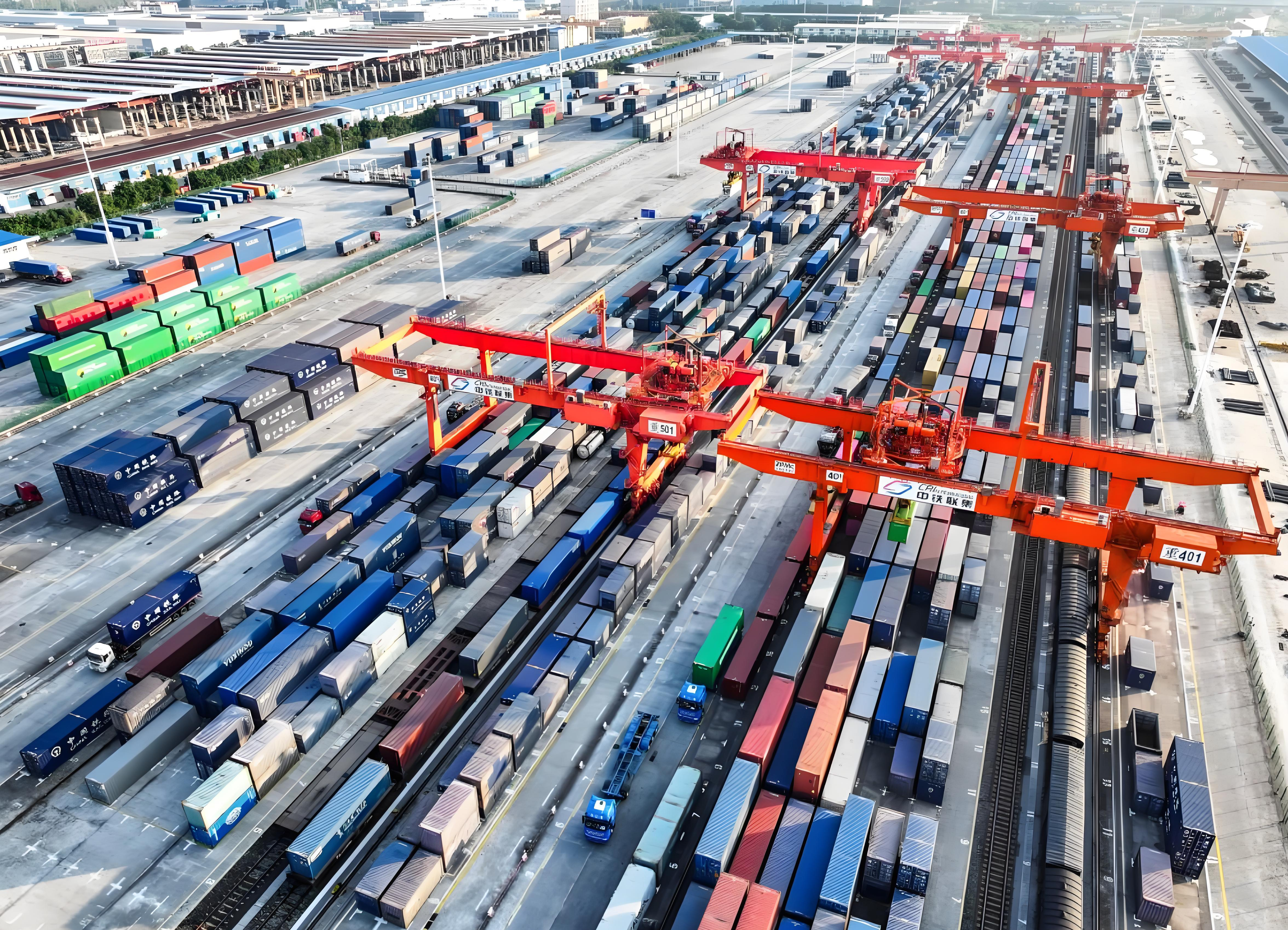
The Chongqing International Logistics Hub Park, a key node of the ILSTC, is lined with neatly stacked containers. (Photo/Wang Quanchao)
It is worth noting that this UN convention did not emerge in isolation. Its conceptualization drew inspiration from pioneering practices in Chongqing, China. As a key starting point for the China Railway Express, enterprises in Chongqing and Sichuan have led the exploration of financing through cross-border railway waybills in China-Europe trade, providing valuable practical examples that helped shape the convention.
 Related Stories