 Bridging News
CPPCC Member Yu Guodong Highlights Draft Ecological Code and New Monitoring Regulation as Legal Milestones
Chongqing - Ahead of China's 2026 Two Sessions, Yu Guodong, a member of the National Committee of the Chinese People's Political Consultative Conference (CPPCC) and director of Chongqing Municipal Ecology and Environment Bureau, said he is closely watching China's Draft Ecological and Environmental Code, describing it as a major step in strengthening the country's environmental rule-of-law framework.
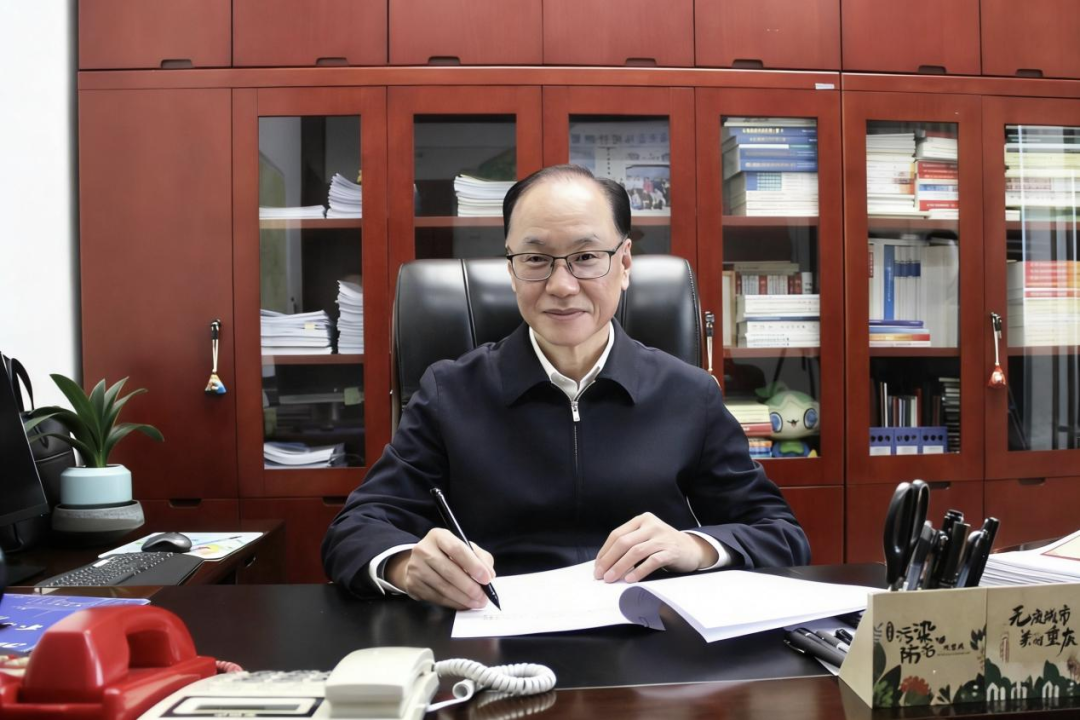
Yu Guodong, a member of the National Committee of the Chinese People's Political Consultative Conference (CPPCC) and director of Chongqing Municipal Ecology and Environment Bureau. (Photo/Tang Hailin)
Yu said he has high expectations for the draft, describing it as China's second piece of legislation to be formally designated a "code." He said it embodies a rule-of-law vision for building a "Beautiful China" and provides a legal foundation for governance aimed at harmony between humans and nature.
The Paper reported that the first 2026 issue of China's People’s Congress magazine outlined the third review draft of the Ecological and Environmental Code, which spans 1,242 articles and addresses a range of public concerns. The draft introduces a record-filing system for environmental monitoring agencies, strengthens oversight of cross-regional waste dumping, tackles human-wildlife conflicts, and improves institutional support for green and low-carbon development.
In response to concerns over falsified data and unreliable monitoring results, the draft requires monitoring agencies to meet clear standards for facilities, staffing and technical capacity, and to file with relevant authorities. By raising entry thresholds and tightening supervision, it aims to close loopholes that have allowed data manipulation.
Yu said the draft code enhances routine supervision of third-party testing agencies and targets weaknesses in the quality and credibility of monitoring data to safeguard its authority. He added that the document sets out principled provisions on climate change governance while reserving room for further legislative development.
Yu linked his attention to the draft code with recent national rulemaking on monitoring. "Last year, I submitted proposals on building an ecological environment monitoring system. This year, on January 1, the 'Ecological Environment Monitoring Regulation' officially took effect," he said, adding that contributing to national ecological legislation strengthened his resolve to continue offering proposals on environmental protection.
Looking back on his work over the past year, Yu said he carried out repeated field research- including visits to farmland, factories, rivers and riverbanks, and emphasized practical investigation.
"Only when your feet touch the mud can you feel confident," he said. He said three proposals he submitted last year targeted difficult issues in environmental governance, including building an "air-space-ground integrated" monitoring system, promoting high-quality development in livestock and poultry farming, and advancing greener shale gas extraction.
For the 2026 annual sessions, Yu said he is preparing proposals on two issues: disposal of urban sewage sludge and management of new pollutants in the Three Gorges Reservoir area.
On sludge disposal, Yu said there are widespread problems such as a mismatch between sludge disposal capacity and the amount produced, lagging cross-regional coordinated supervision, and low public and market recognition of resource-oriented disposal." He recommended adjusting the proportion of sludge-treatment fees within wastewater treatment charges to stabilize funding, introducing electronic waybills for cross-regional sludge transport to achieve full traceability, and accelerating technological breakthroughs to support "harmless, resource-oriented and market-oriented" sludge management.
Yu said Chongqing will refine its governance ecological system under China's dual carbon goals, coordinating carbon cuts, pollution control, greening, and growth. He added the city aims to build a provincial-level "Beautiful China pilot zone" and play a bigger role in green development along the Yangtze River Economic Belt.
 Related Stories