 Bridging News
Chongqing Delegation Open Day Draws Global Media Focus on Consumption, Autos and Industry
Beijing - On March 6, China's Chongqing delegation to the National People's Congress (NPC) held an open day to deliberate on the draft outline of the 15th Five-Year Plan (2026-2030) for national economic and social development. NPC deputies shared insights and answered questions from 178 journalists from 95 media outlets, including 30 foreign ones, with discussions focusing on consumer spending, the automotive industry and Chongqing’s industrial development.
At present, the issue of insufficient effective demand remains prominent, making the stimulation of consumption a crucial focus for China’s economic agenda. The draft explicitly calls for vigorous efforts to boost consumption.
Chongqing made strides in the consumer sector in 2025, with total retail sales of consumer goods reaching 1.67 trillion yuan (242.12 billion U.S. dollars), a 3.1% increase from the previous year, positioning it at the top among Chinese cities. The city hosted over 500 million domestic and international tourists, with restaurant revenue reaching 254.7 billion yuan, demonstrating sustained market vitality.
"Behind these impressive figures is Chongqing's continuous effort to innovate its consumer experiences," said Yan Qi, a deputy to the NPC and Chairman of Chongqing Taoranju Group, during an interview with reporters.
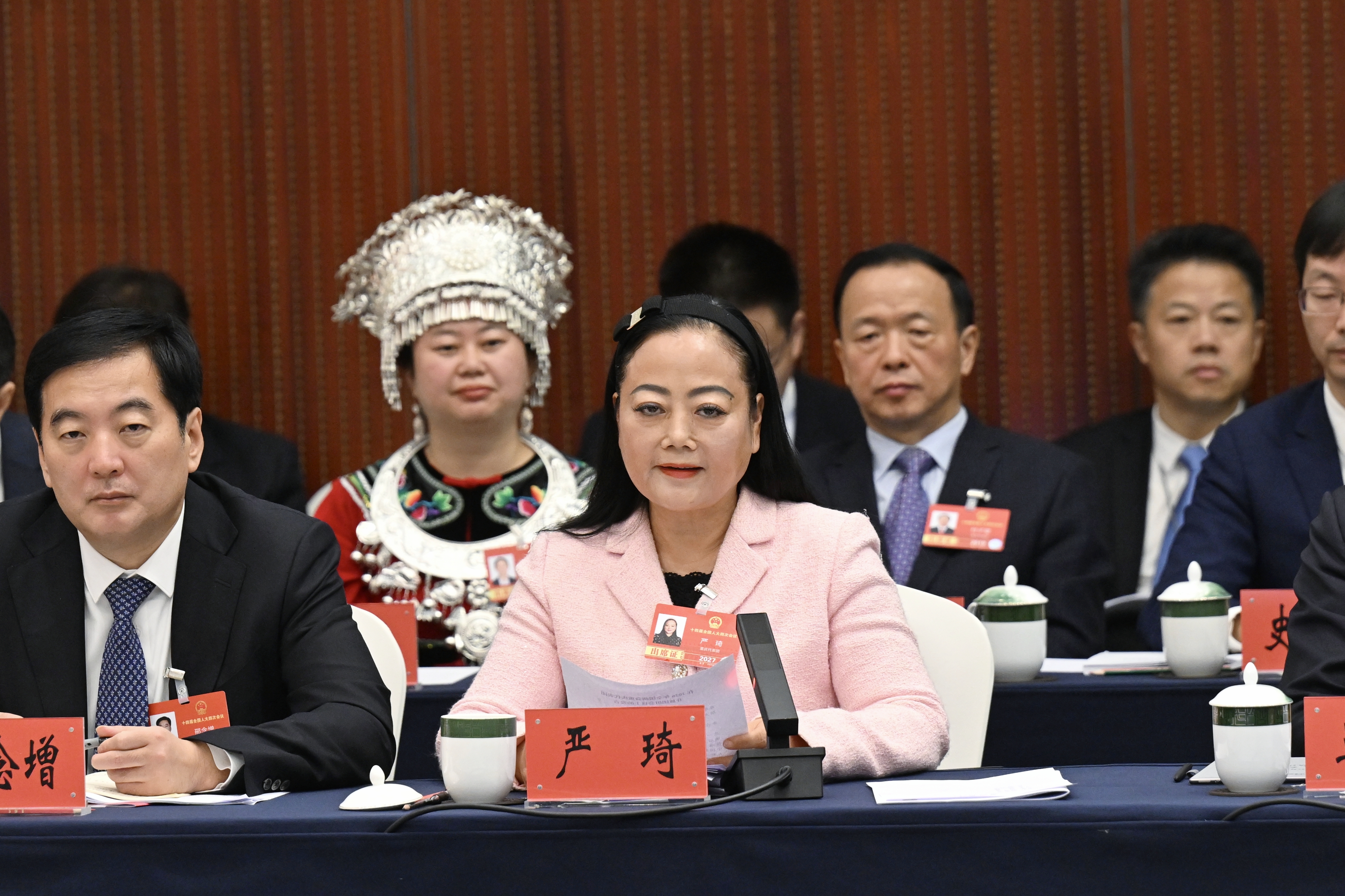
Yan Qi, an NPC deputy and Chairman of Chongqing Taoranju Group, introduced the promotion of the "360 Bowls of Chongqing Flavors". (Photo/Ren Jun)
Taoranju, a 31-year-old restaurant enterprise in Chongqing, has been making significant contributions to boosting local consumption by creating culinary cultural districts, building 5G-enabled smart cold chain factories, and advancing the “360 Bowls of Chongqing Flavors” brand.
The “360 Bowls of Chongqing Flavors”, a key component of Chongqing's food directory, is deeply rooted in the region’s traditional banquet culture and includes authentic Chongqing dishes like hotpot and noodles, each representing the unique flavors of various districts in the city.
To make these signature dishes more accessible, the brand integrates into various consumer settings, such as restaurants and specialized food streets. The most representative is “360 Bowls of Chongqing Flavors” Taoranju National Trend Food Street, which houses 118 businesses. Yan stated that consumers can sample the full range of dishes from the “360 Bowls of Chongqing Flavors” and experience the intangible cultural heritage of Sichuan and Chongqing.
Yan emphasized that the application of cold-chain technology and 5G factories has extended the shelf life of Chongqing's signature spicy and fragrant foods. These products can now be exported to countries along the Belt and Road Initiative through the New International Land-Sea Trade Corridor. "The '360 Bowls of Chongqing Flavors' becomes the taste card for Chongqing's global presence," he added.
The draft not only emphasizes promoting consumption but also stresses the importance of ensuring and improving people's livelihoods. While promoting consumption, Chongqing also focuses on social welfare development.
Amid broader demographic changes, China’s education system needs to adjust accordingly. But the direction those changes should take has become a widely discussed issue in Chinese society. In an interview with Bridging News, Liu Xiya, an NPC deputy and principal of Chongqing Xiejiawan School, said she believes promoting smaller class sizes should be an important direction for education reform.
A deputy to the NPC and Secretary of the CPC Chongqing Shapingba Committee, Qi Meiwen, stated that Shapingba is a region rich in educational and healthcare resources. The district is exploring ways to balance the distribution of high-quality education and medical resources, driving continuous improvements in people's well-being.
A deputy to the NPC and a taxi driver, Yin Qilong, drawing on his experience, observed and discussed the changes in Chongqing’s urban development. He mentioned that when he first started driving a taxi, the city's main roads were few, narrow, and required advanced driving skills.
With the city's rapid development, traffic infrastructure has been continuously improved, with Chongqing now having 4,771 kilometers of expressways and 1,356 kilometers of high-speed rail.
In addition, He said that Chongqing's taxi industry has grown rapidly. Vehicles have evolved from early manual-transmission and gas-powered models to the current new-energy vehicles, reflecting the successful transformation and upgrading of Chongqing's industries.
Changan Chairman Zhu Huarong: Chongqing auto industry "rising"
During the Q&A session, a reporter asked about the development of Chongqing's new energy vehicle (NEV) industry, a topic that greatly excited Zhu Huarong, a deputy to the NPC and Chairman of Changan Automobile Group. He proudly exclaimed in Chongqing dialect, "The Chongqing automobile industry, to put it in our own words, is 'rising'!”
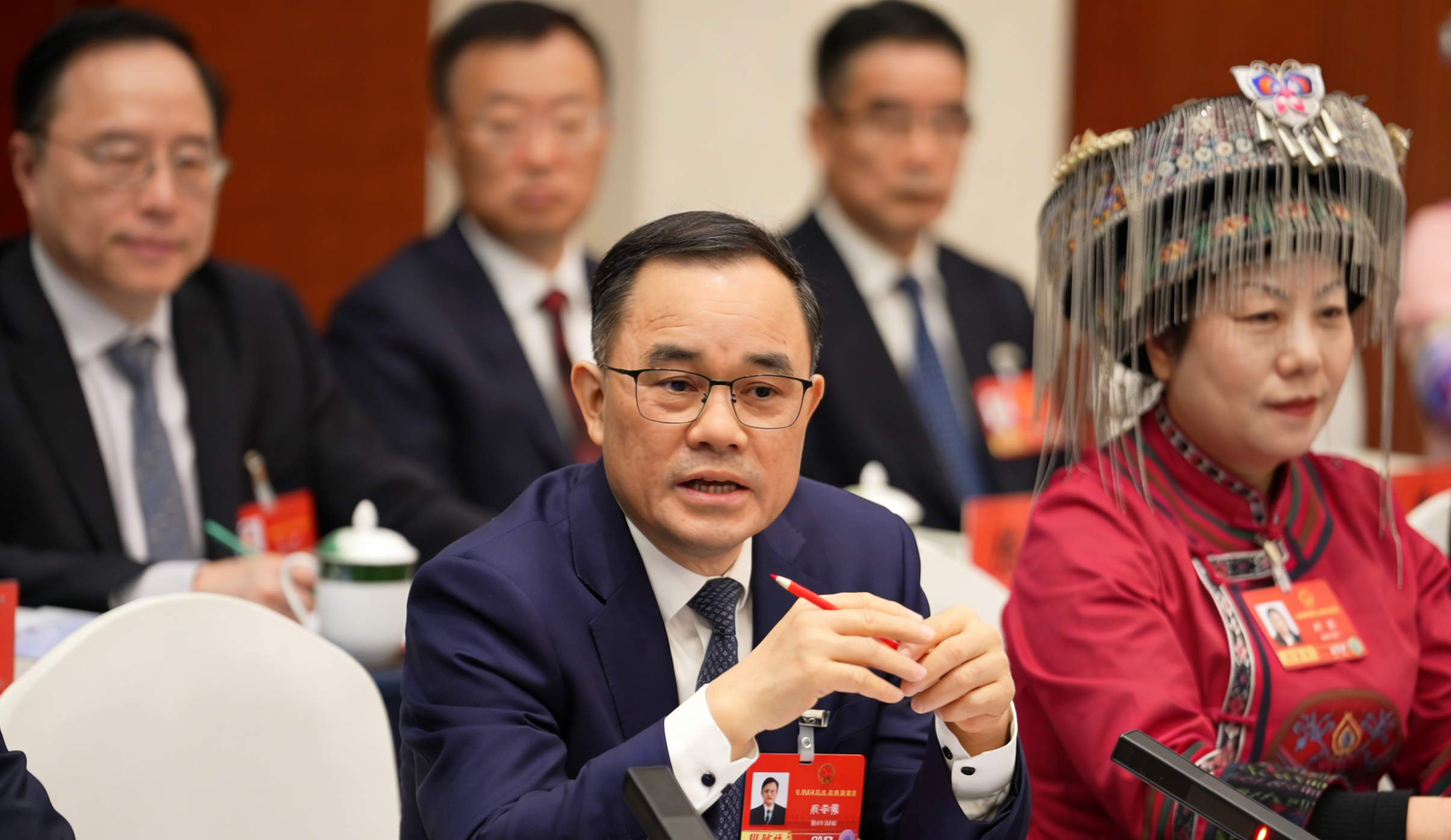
Zhu Huarong, an NPC deputy and Chairman of Changan Automobile Group, responded to journalists' questions regarding Chongqing's new energy vehicle industry. (Photo/Luo Huxin)
In the past five years, Chongqing’s automotive industry has ascended and is on a rapid upward trajectory. By 2025, Chongqing’s annual automobile production reached 2.788 million vehicles, regaining the position of the top vehicle production city in China. Among these, 1.296 million are NEVs, 30 times the figure from 2020, showing robust industry growth.
Zhu shared that the core indicator of Chongqing's rapid growth in the NEV industry is the fast-paced improvement in intelligence levels. The first L3-level autonomous driving license plate in China was issued in Chongqing, marking a milestone in Changan Automobile's intelligent strategy.
In China, autonomous driving is classified into levels 0-5 based on dynamic driving task execution capabilities, with L3-level autonomous driving representing the crucial transition from assisted driving to full automation. Zhu explained that L3 autonomous driving allows the car to take over much of the driving process, significantly reducing the driver's workload.
As the third centrally-managed state-owned automobile enterprise settled in Chongqing, China Changan Automobile Group continues to promote high-quality development of Chongqing’s NEV industry by relying on its own intelligent vehicle R&D team and supply chain ecosystem. Zhu stated that in the next 10 years, Changan plans to invest over 200 billion yuan and expand its technology team by more than 10,000 people, injecting new momentum into the city's automotive sector.
The development of Chongqing's automotive industry relies heavily on a well-established local industrial chain and the city's overall industrial capabilities. Wang Zhijie, a deputy to the NPC and Director of Chongqing Municipal Commission of Economy and Information Technology, said that by 2025, the local supply rate for Chongqing’s two major automotive giants, Changan and Seres, will rise to 45% and 51%, respectively. Currently, Chongqing has built a complete automotive industry system with 18 vehicle manufacturers and over 1,200 parts suppliers.
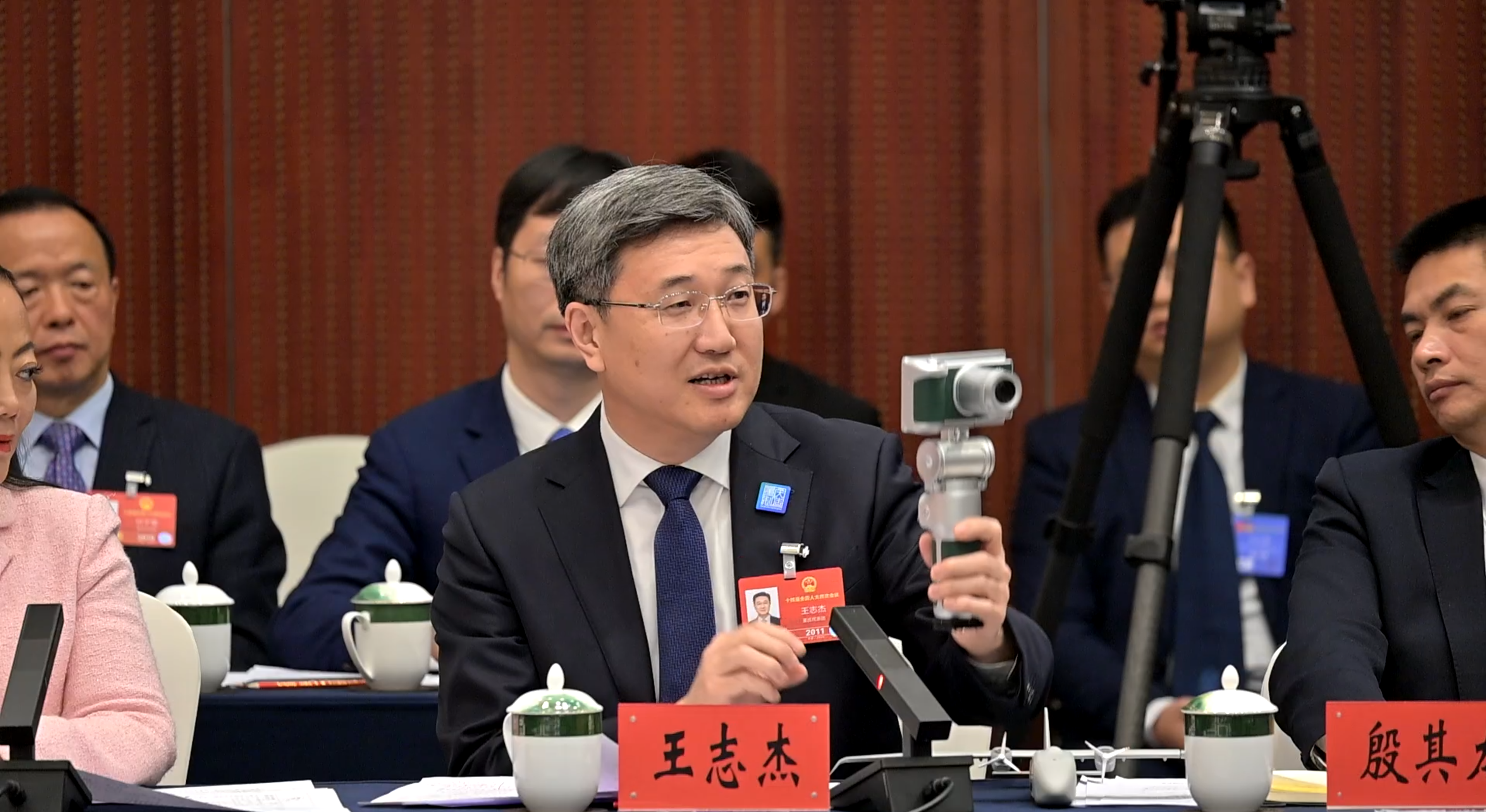
Wang Zhijie, an NPC deputy and Director of Chongqing Municipal Commission of Economy and Information Technology, provided an overview of Chongqing's overall industrial situation. (Photo/Ren Jun)
As a major manufacturing hub in southwestern China, Chongqing's industrial economy continues to grow. Wang noted that over the past five years, Chongqing's industrial economy has exceeded 30 trillion yuan, with ongoing efforts to advance industrial upgrading and innovation. Presently, the added value of strategic emerging industries accounts for 36.3% of the city's industrial value-added output. These industries, driven by major technological innovations, cover sectors such as information technology, new materials, and NEVs.
Chongqing strongly supports youth innovation and entrepreneurship. At the meeting, Wang showcased an AI long-range camera developed by a team of young engineers in Chongqing. Designed to meet emotional value demands, the camera is capable of long-distance birdwatching and precise tracking and can be applied in settings such as concerts and football matches. The product is a symbol of Chongqing's transformation in the next generation of electronic information manufacturing.
Wang emphasized that Chongqing aims to create a comprehensive industrial innovation ecosystem, enabling every innovation dream to take root and flourish, and allowing “Made in Chongqing” to not only produce major national projects but also reach households, helping to establish the “Made in Chongqing” brand fully.
 Related Stories