 Bridging News
Chongqing Delegation Outlines Goal of Building World-Class Intelligent Connected NEV Industry
Chongqing - China’s Chongqing delegation to the National People’s Congress (NPC) filed a group suggestion with the country’s top legislature on March 7 during the NPC’s fourth session, calling for national support to help the southwestern municipality become a capital for intelligent connected new energy vehicles (NEVs).
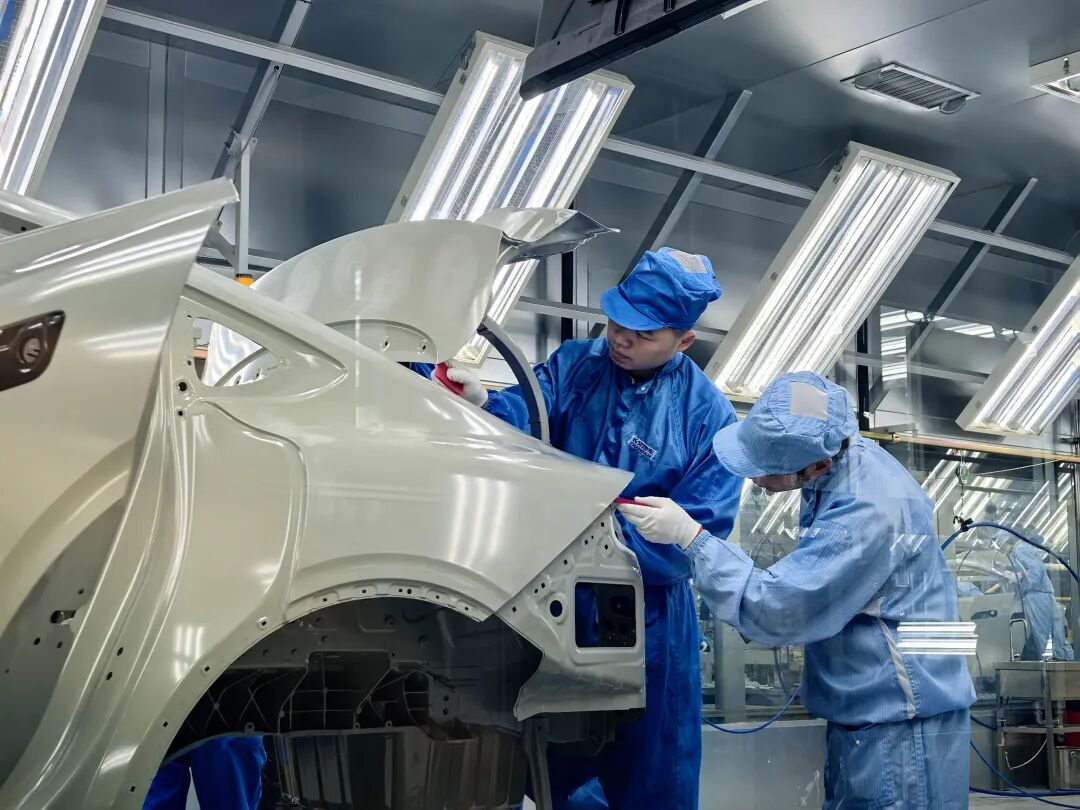
Workers operate on the production line at Changan Automobile's digital intelligent factory in Chongqing. (Photo/Changan Automobile)
At the heart of the suggestion is Chongqing’s case that it has emerged as one of China’s leading auto production hubs and is well-positioned to play a bigger national role in intelligent connected NEVs.
The delegation said the city produced 2.788 million vehicles in 2025, up 9.7% year on year, ranking first among Chinese cities and third among provincial-level regions nationwide, while NEV output reached 1.296 million units, up 36% year on year and 30 times the 2020 level.
Those gains, the delegation said, have been supported by a broadening industrial base. Chongqing has formed a full automotive cluster led by state-owned Changan Automobile, privately owned SERES and Afari Technology, alongside manufacturing bases for major automakers including SAIC, Geely and Great Wall Motor.
The city's supply network now includes more than 1,000 supporting enterprises, including BYD Battery, CATL, and ADAYO, according to the suggestion. Chongqing has also introduced and cultivated 624 intelligent connected NEV parts makers, achieving full coverage across three major systems, 12 major assemblies and 56 components.
Against that backdrop, Chongqing said it will use China's 15th Five-Year Plan period (2026-2030) to pursue its goal of becoming an intelligent connected NEV capital. The delegation said the city aims to build a globally leading intelligent connected NEV industry, along with world-class automakers and competitive mid- to high-end brands backed by homegrown core technologies.
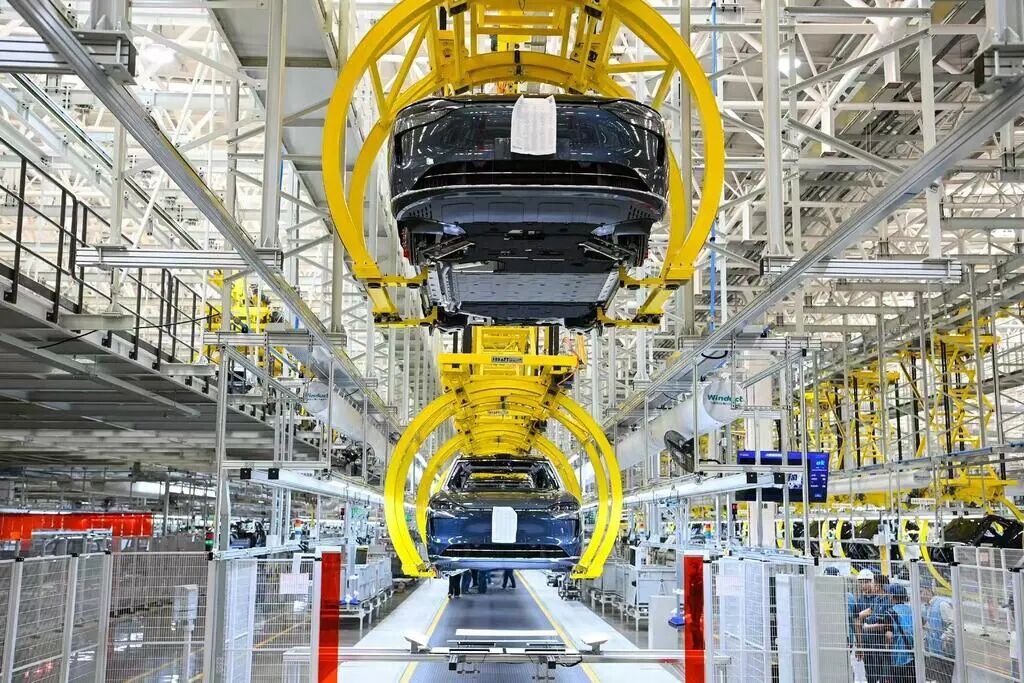
A view of the SERES Super Factory in Chongqing. (Photo/SERES Group)
To support that goal, the delegation proposed five areas of support centered on industrial upgrading, innovation, brand development, global expansion, and ecosystem building.
It called for backing major automotive projects in Chongqing to strengthen control over the industry chain, including broader access to China's "two new" policy support and ultra-long-term special treasury bonds for complete vehicle manufacturing.
The "two new" policy refers to large-scale equipment renewal and consumer goods trade-in programs. The delegation also urged more support through special relending for industrial upgrading, equipment renewal, and other policy-backed financial tools to speed the shift toward smarter, more digital, and greener manufacturing.
At the same time, it called for closer integration of industrial and technological innovation, with support for Chongqing companies to take part more deeply in national projects in areas such as autonomous driving, flying cars and embodied robotics. It also proposed a national pilot platform focused on "AI plus vehicles."
The delegation further urged support for building world-class automakers and stronger domestic brands, including reform pilots for Changan and wider national testing access for SERES in intelligent connected vehicle entry and road-use programs. It also called for support for Chongqing's international expansion, alongside services for certification, standards coordination, and cross-border risk prevention.
Broader ecosystem support was also included, with proposals for a Sichuan-Chongqing hydrogen-energy pilot city cluster, talent development platforms, and international automotive exchange mechanisms. The delegation said the measures would strengthen Chongqing's role in China's automotive transition and boost the country's competitiveness in the global intelligent connected NEV industry.
 Related Stories